
The Complete Guide to Cycling in Kyoto
Overview
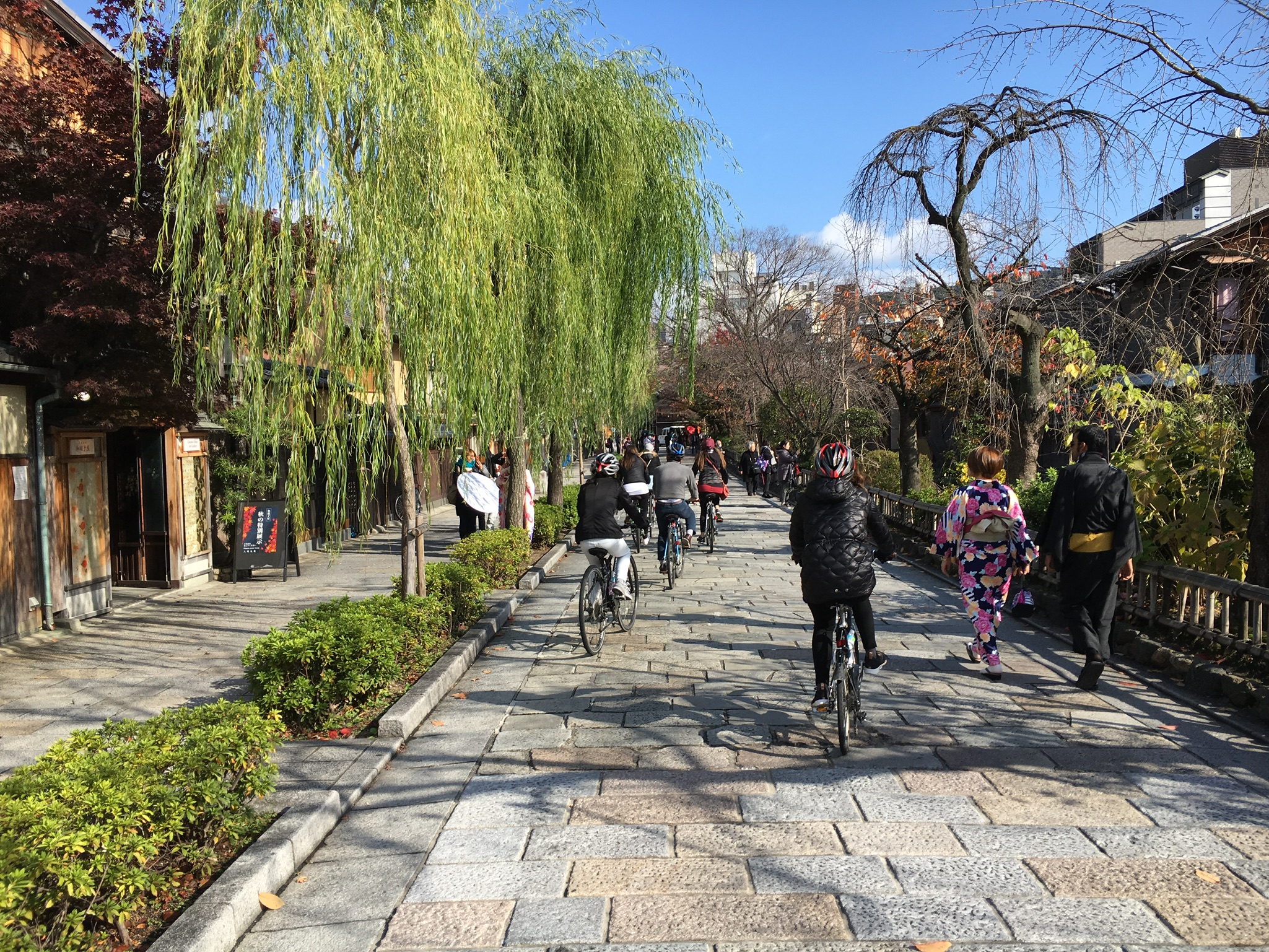
Kyoto is one of the best cities in the world to explore by bicycle. The city centre is flat, the grid layout makes navigation easy, and the temples, shrines and gardens are spread out in exactly the way that exhausts people on foot and frustrates them on buses. A bike covers the same ground at a quarter of the effort, gets you to Fushimi Inari before the crowds, and takes you down backstreets no bus route touches. We've been guiding bike tours here since 2015, and this guide covers everything we tell guests before they ride: routes, seasons, fitness, e-bikes, kids and the rules of the road.
Why a bike beats the bus in Kyoto
Kyoto's famous sights are scattered. The Golden Pavilion sits in the northwest, Fushimi Inari in the southeast, the Silver Pavilion in the northeast and so on. Visiting them by bus means long queues at the stops tourists use, standing room in peak season and a lot of dead time. Walking between districts takes hours.
The city is also, helpfully, mostly flat. The centre sits in a river basin, the streets run on a grid laid out over 1,200 years ago, and the Kamo River path gives you a car-free spine running north to south. If you can ride a bike, you can ride Kyoto.
The one thing a bike does that nothing else can: it gets you into the gaps between the sights. The machiya-lined backstreets, the neighbourhood shrines, the covered markets. That's the Kyoto most visitors never see, and it's the reason people who cycle the city once tend to do it again.
The districts, by bike
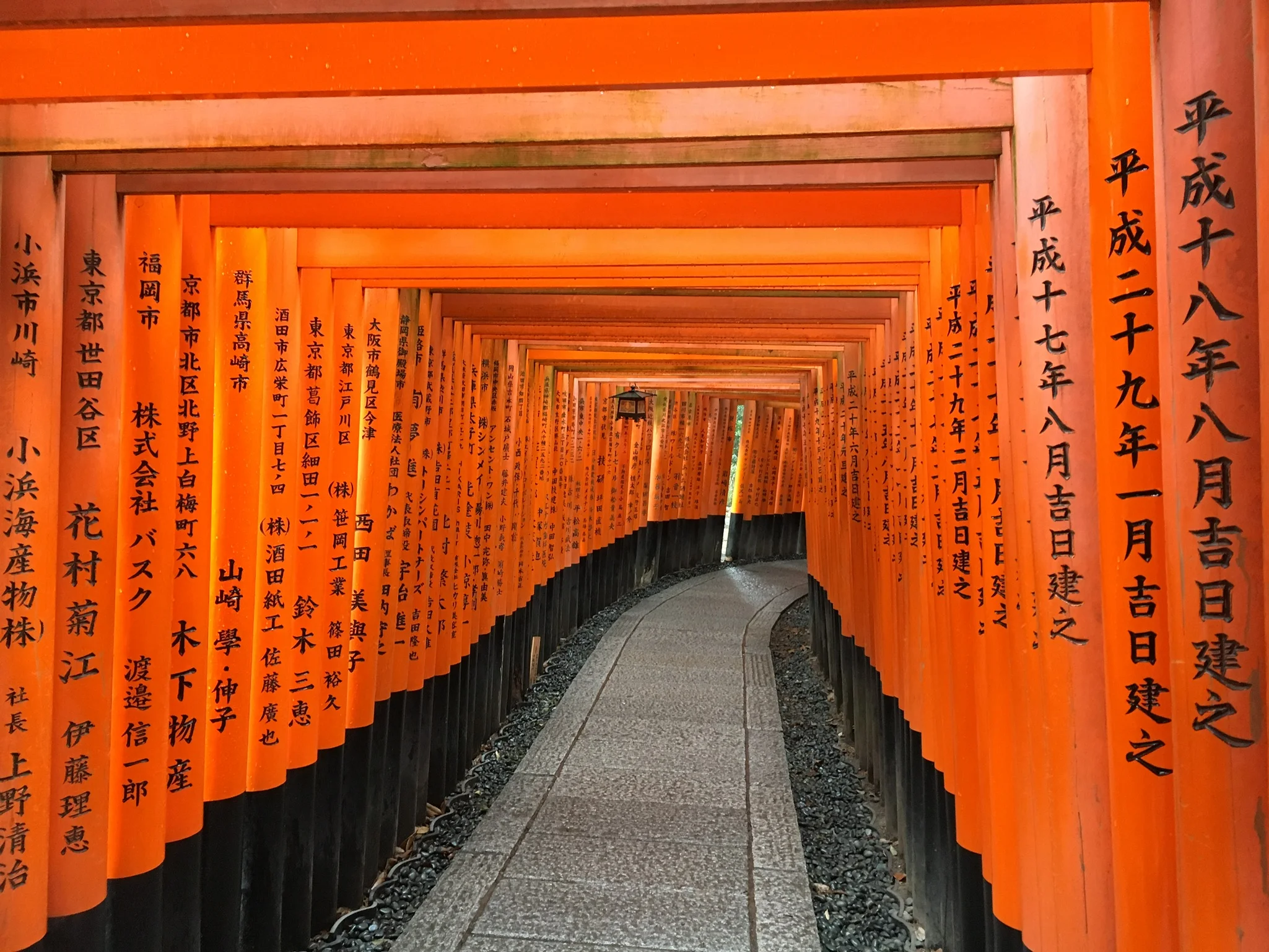
South Kyoto: Fushimi Inari and the riverside. The thousand torii gates of Fushimi Inari are Kyoto's most photographed spot and its most crowded. By bike you can arrive early, ride the quiet riverside paths to get there and escape south to the sake district of Fushimi when the tour buses arrive. Our South Tour covers this in 4 hours and about 16 km (¥12,000 per person).
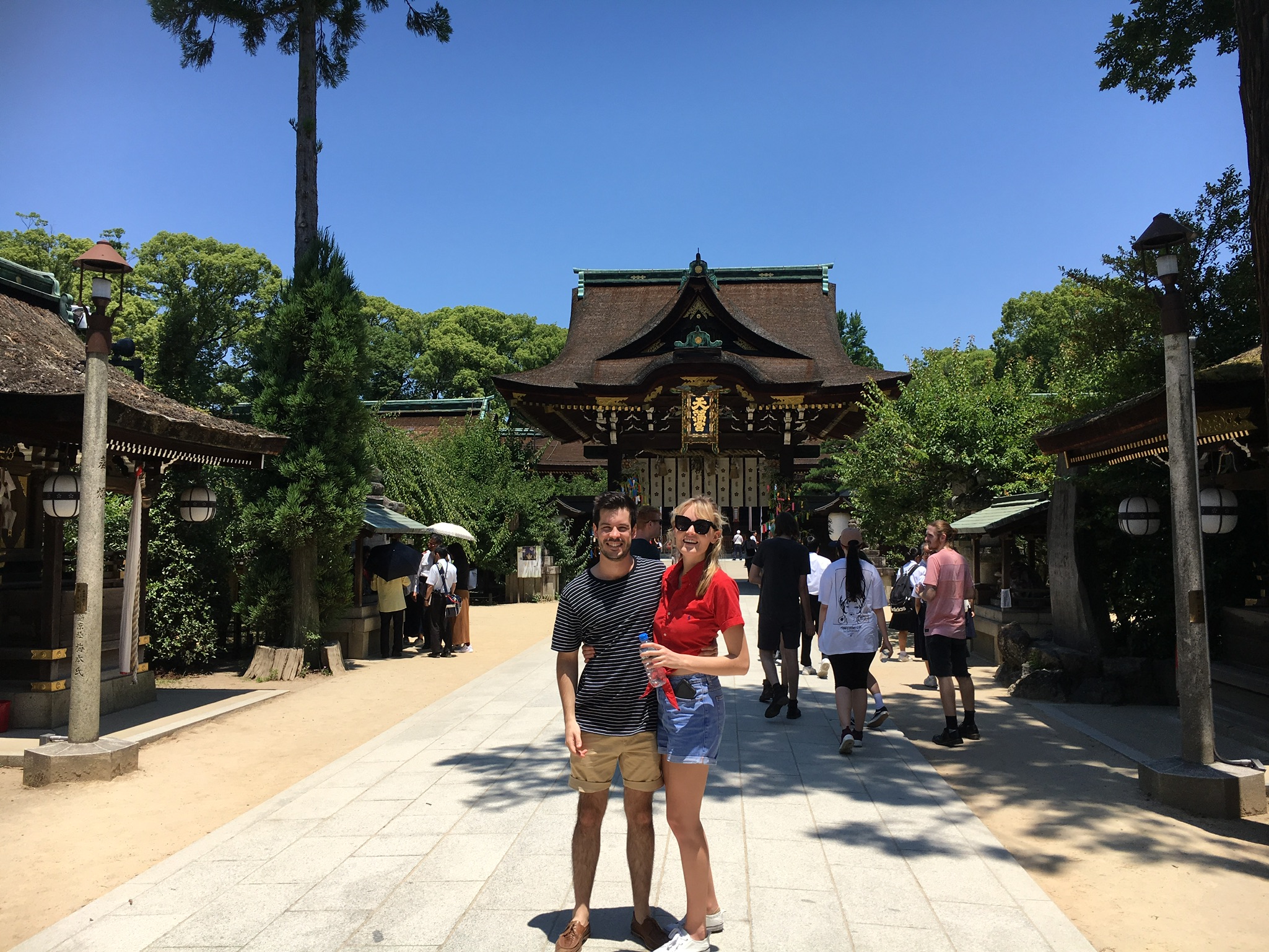
Central Kyoto: The Imperial Palace and the markets. The classic first-visit territory. Distances between the big central sights are just far enough to make walking a slog, which is exactly the problem a bike solves. Our Full Day Tour links the Kitano Tenmangu, the Imperial Palace, Honganji Temple with Fushimi Inari and the Golden Pavilion in 8 hours and about 30 km (¥18,000 per person).
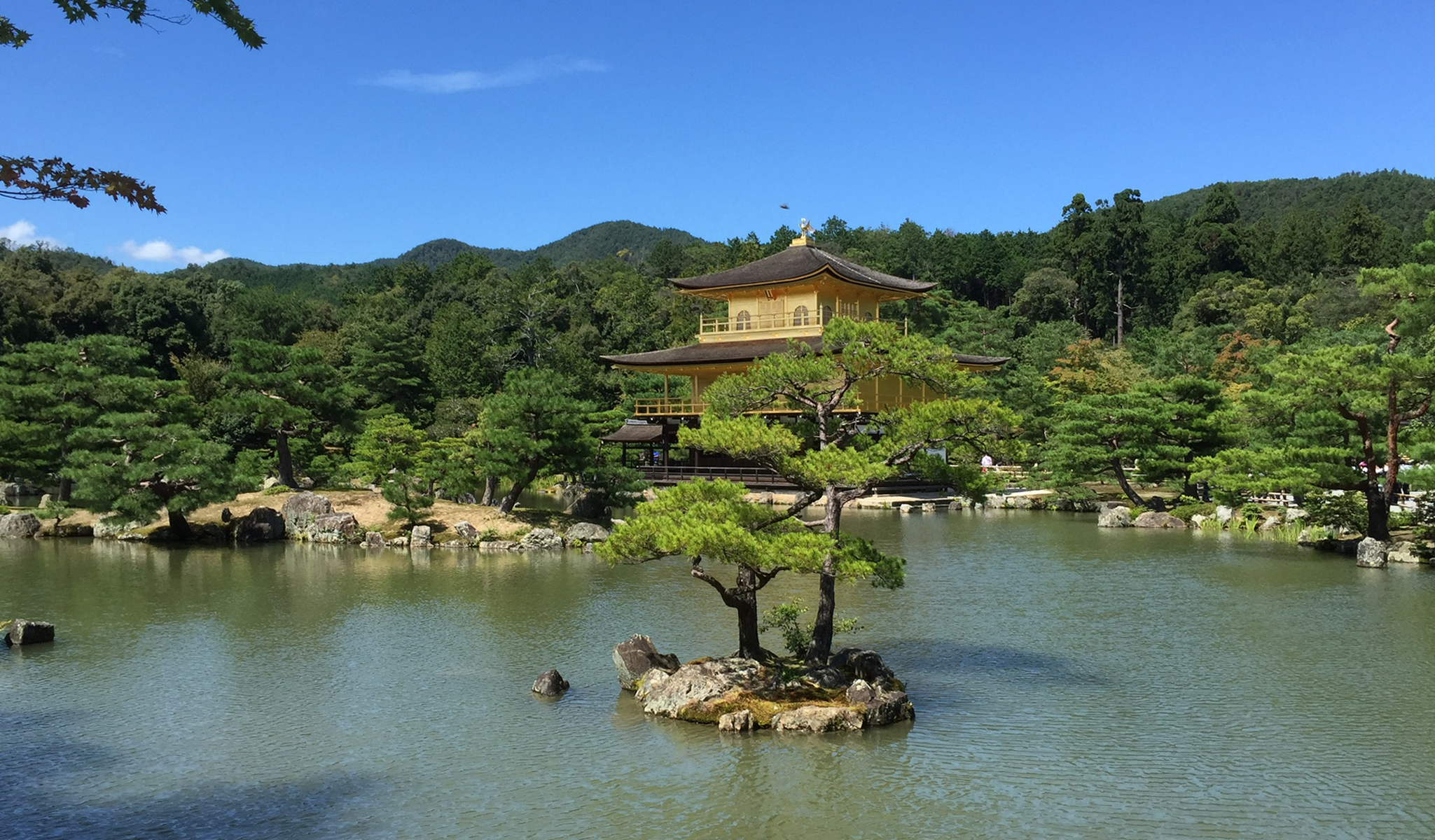
North Kyoto: The Golden Pavilion, then the quiet side. Home to Kyoto’s ever popular Golden Pavilion, the north of the city is also furthest from public transport and is the best place to find temples without queues, gardens without selfie sticks, and residential streets where you'll hear more bicycle bells than tour groups. Our North Tour does it in 7 hours and about 22 km (¥16,000 per person).
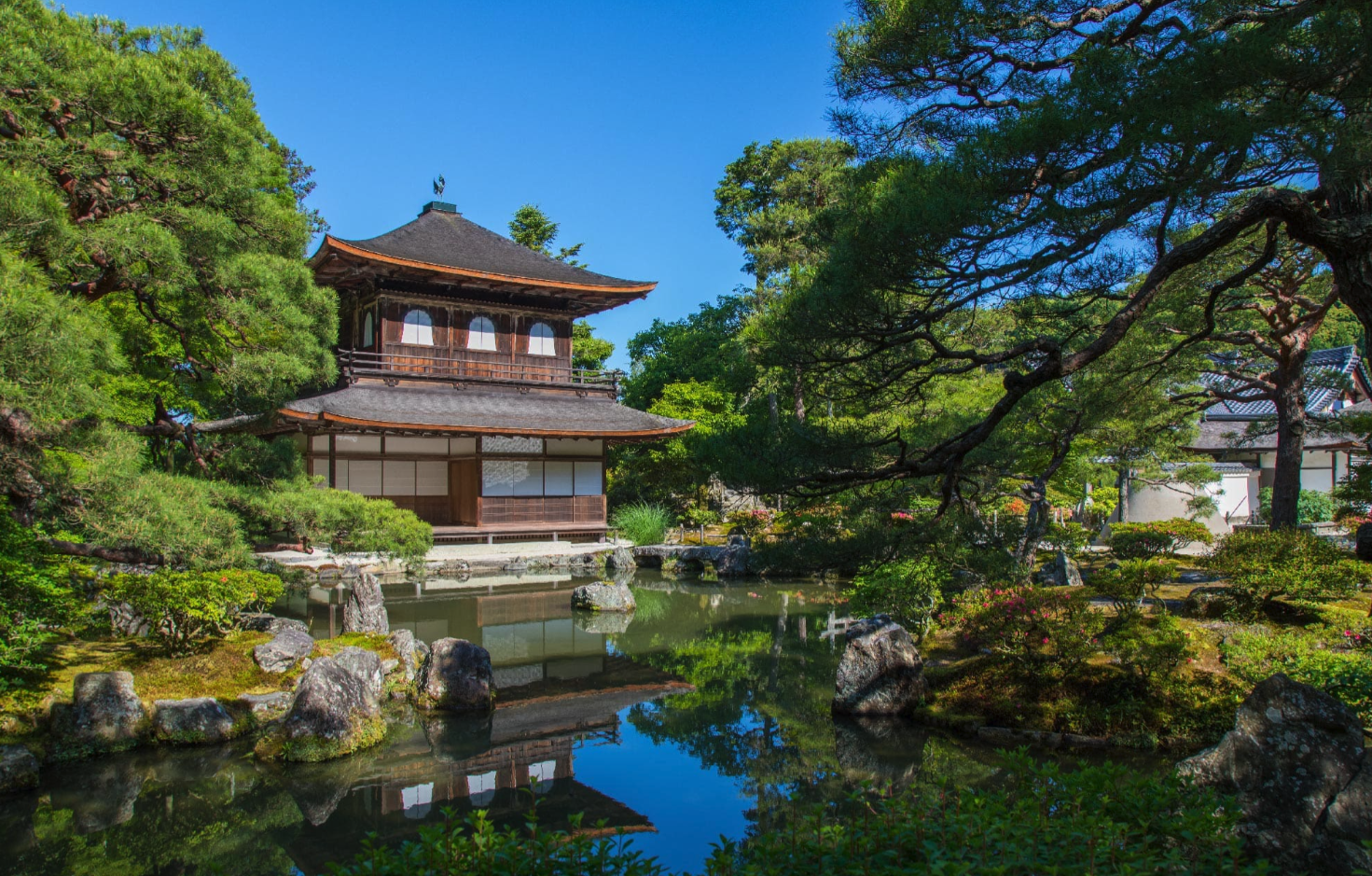
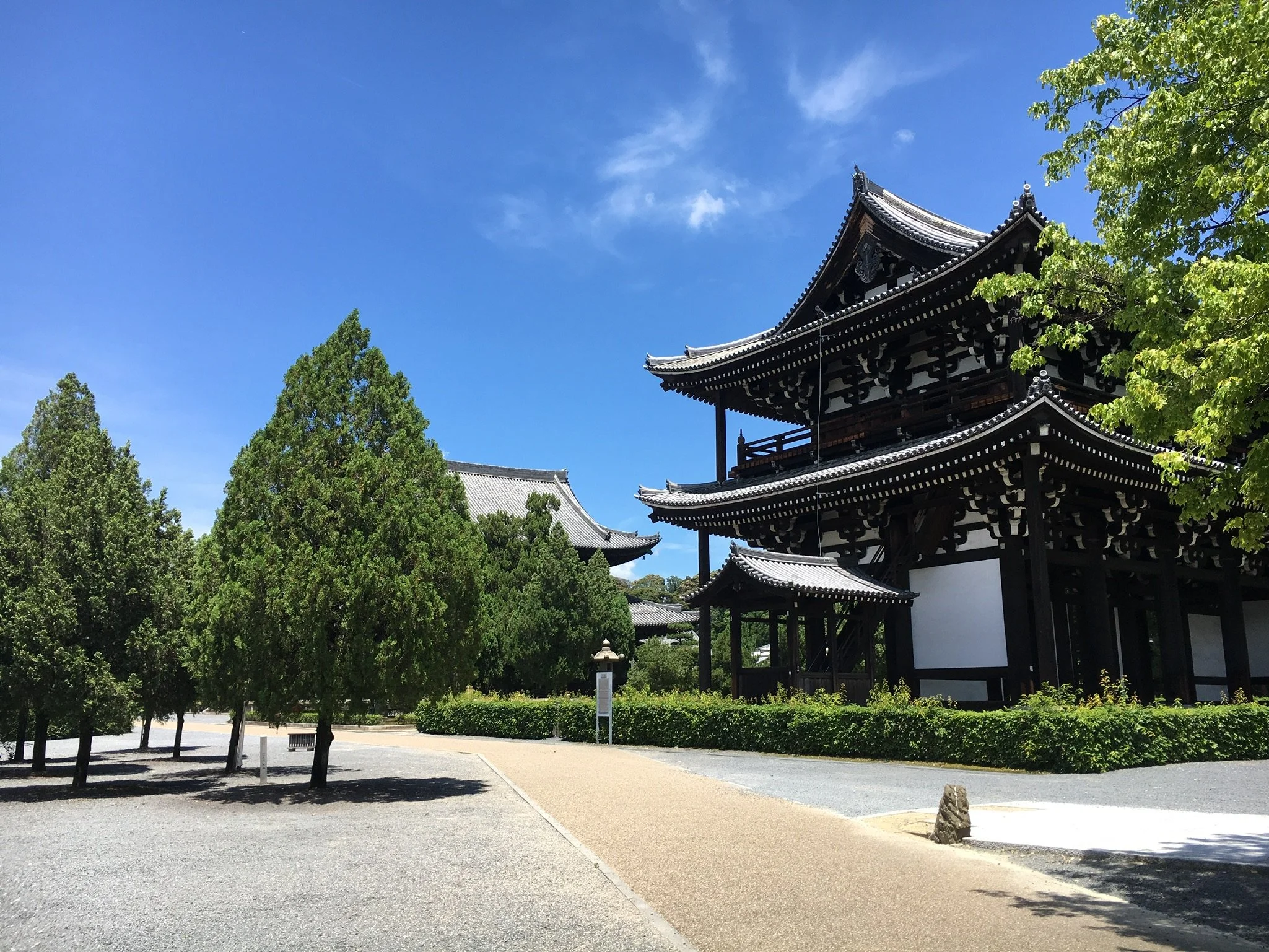
East Kyoto: the Silver Pavilion and the Path of Philosophy. Best ridden early. The Path of Philosophy, the canal-side walk between the Silver Pavilion and Nanzenji, is lovely at 8am and a shuffle by 11am. This is why our E-Bike Tour departs early: Fushimi Inari before the crowds, then Tofukuji, the Silver Pavilion and the Path of Philosophy, 7 hours and about 25 km (¥21,000 per person).
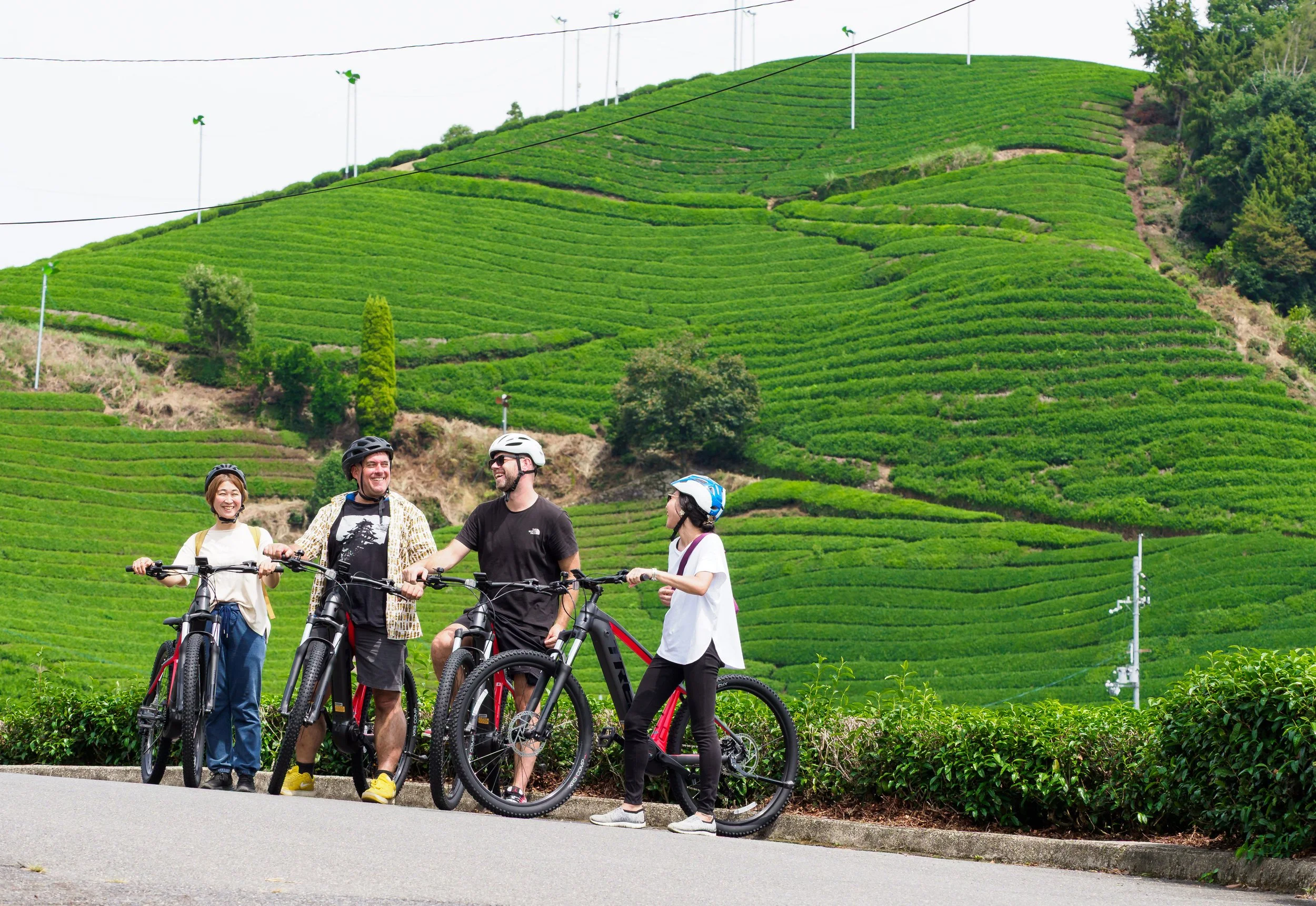
Beyond the city: the tea fields. Under an hour from Kyoto Station are the Kasagi valley and the Wazuka tea fields, some of the most beautiful cycling in Japan and almost nobody knows it's there. Our sister brand Cycle Kasagi runs those rides. If you have a spare day, that's where we'd send you.
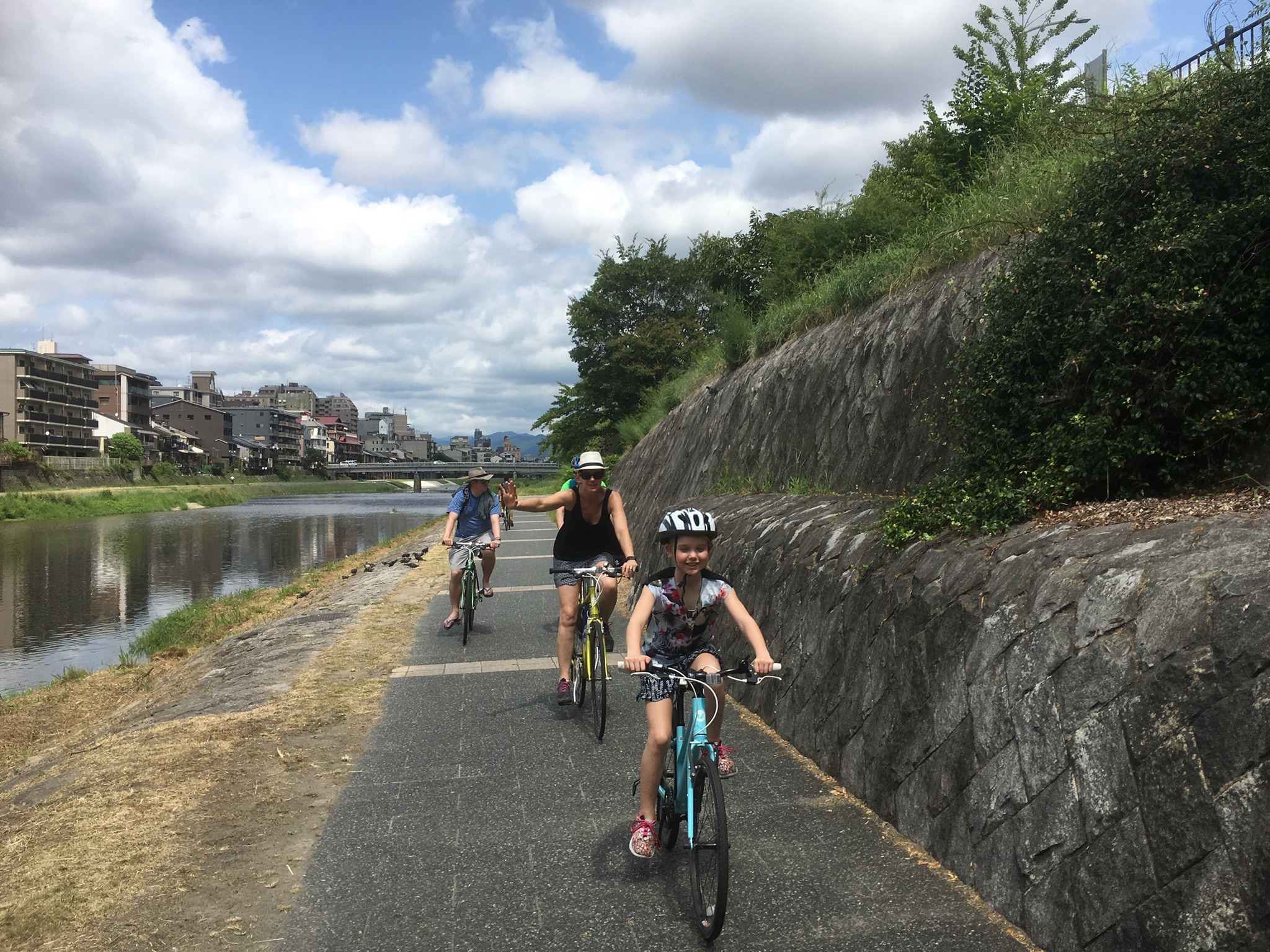
Cycling Kyoto with kids
Kyoto works well for family cycling: flat streets, river paths and plenty of short-hop distances between ice cream stops. We run a Private Family Tour with kids' bikes, child seats and a route your family sets the pace for. For a family up to 5 people, the price is set at ¥65,000. Lunch, e-bikes, child seat and tag-alongs and other options can be added at checkout.
E-bike or standard bike?
Honest answer: for the flat central routes, a standard bike is fine and plenty of guests prefer the feel of it. Where the e-bike earns its keep:
Longer days. Assist on a 25 to 30 km day means you finish wanting more, not wanting a taxi.
The eastern hills. The approaches to some eastern temples climb. E-assist flattens them.
Summer. Kyoto in July and August is hot and humid. Less effort on two wheels is always welcome with our summer riders.
Mixed-ability groups. One strong rider and one nervous one can ride together comfortably when the nervous one has a motor.
We run both. Our bikes are quality e-bikes and comfortable hybrids, maintained daily, fitting riders from 120 to 200 cm, with child seats and kids' bikes available.
How fit do you need to be?
If you can ride a bicycle comfortably for a few hours with breaks, you'll be fine. Kyoto is mostly flat, our pace is relaxed and we stop often (because stopping is the point). E-bike tours make it easier still, and we can design an easier private course on request.

When to ride: Kyoto by season
Spring (late March to April). Cherry blossom season. The city is at its most beautiful and its most crowded. A bike is the single best crowd-avoidance tool Kyoto has: you can reach the quieter blossom spots locals use while the crowds queue at the famous ones. Book tours well ahead.
Summer (July to September). Hot, humid, and quieter than you'd expect. Ride early, carry water, favour e-bikes and shaded routes along the rivers. June brings the rainy season; see our rain policy below.
Autumn (mid-November to mid-December). The maple season rivals cherry blossom for beauty and crowds. Same advice: the bike gets you to colour the buses can't reach. Book ahead.
Winter (December to February). Cold, clear and gloriously empty. Snow on the Golden Pavilion is one of the best sights in Japan and you can sometimes have a temple garden nearly to yourself. Dress in layers; the riding itself keeps you warm but the wind can bite.
The rules of the road (the short version)
Ride on the left, as cars do.
Cyclists in Japan commonly use the pavement; ride slowly and give pedestrians priority. When the pavement is not wide enough, we need to switch to the roadside, often with cycle markings to indicate. Our guides know the roads intimately and have all the knowledge needed to make your ride as smooth as it can be.
Don't ride through temple or shrine grounds. Park at the gates; most major sights have bicycle parking nearby.
Lights on at night are required by law.
Parking matters: leave a bike outside designated areas in the city centre and it can be impounded. On our tours, we handle parking for you.
As for helmets, for children 12 and under they are compulsory. Over 12, it is up to the individual - we provide them for those who want one.
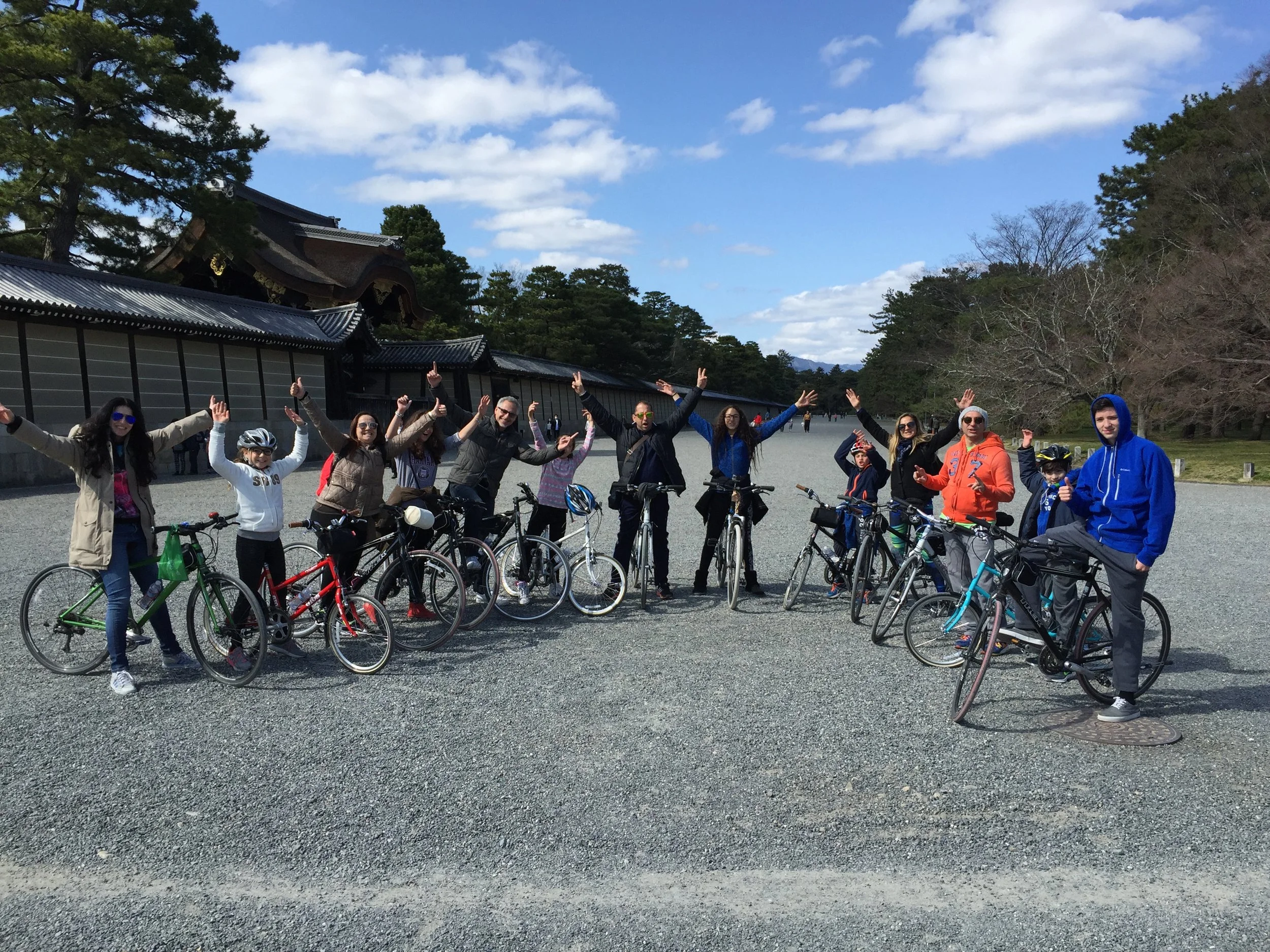
Guided or self-guided?
Renting a bike and exploring alone is a fine way to spend a Kyoto afternoon and we'd never tell you otherwise. A guided ride adds the route knowledge, parking handled, stories at each stop, and the places you'd never find online. Our guests often do a guided day first and then rent bikes with confidence after that.
Common Questions
What happens if it rains? Riding in the rain is neither fun nor safe, so we cancel and fully refund if the previous day's forecast gives more than a 60% chance of rain.
Where do tours start? All Kyoto tours start from our HQ at 7 Nishisannōchō, Higashikujō, Minami-ku, a short walk south of Kyoto Station.
Can I just rent a bike from you? No, unfortunately we do not provide rentals but instead refer people to Ecotrip, our local partner.
Is Kyoto safe for nervous cyclists? Yes. Drivers are patient by international standards, speeds in the old neighbourhoods are low and our routes favour riverside paths and backstreets over main roads.
We've been riding these streets since 2015, and we were the first bike tour company in Japan to reach 1,000 TripAdvisor reviews. If you'd rather just turn up and pedal while someone else worries about the route, that's what we're for.